

Pay attention when someone repeatedly pressures you, makes you afraid to speak or tries to control where you go and who you see. You can take a single serious incident seriously and reach out for support whenever you’re concerned.
On this page
1–2. Pressure after a no and punishment for speaking up
1. Pressure after a no. They keep asking for sex, affection, a password or access to your time after you’ve declined. You have the right to change your mind and expect them to stop.
2. Punishing boundaries. They insult you, threaten to leave you stranded or retaliate when you say what you need.

3–4. Isolation and monitoring
3. Isolation. They repeatedly make seeing friends, family or support difficult, or demand that you give up relationships they dislike.
4. Monitoring. They track your location or read messages without your agreement, or insist you account for every stop or conversation.
5–6. Humiliation and repeated denial
5. Humiliation. They regularly mock you, expose things you shared privately or use insults to make you feel small.
6. Denying what happened. They repeatedly insist events you remember never occurred, or use confusion about details to sidestep what they did.
7–8. Control over necessities and intimidation
7. Restricting access. They take money, keys or transport away to limit what you can do, or interfere with work or access to care.
8. Intimidation or violence. They threaten you, block a doorway, damage things to frighten you or hurt you. If you’re in immediate danger, contact local emergency services if you can safely do so.
Get support at a time and place that feel safe
Consider talking privately with someone you trust or a local domestic abuse service. If you think your device or accounts are monitored, use a safer device or channel when you can. In the United States, the National Domestic Violence Hotline offers help with personal safety planning.
Read the infographic in text
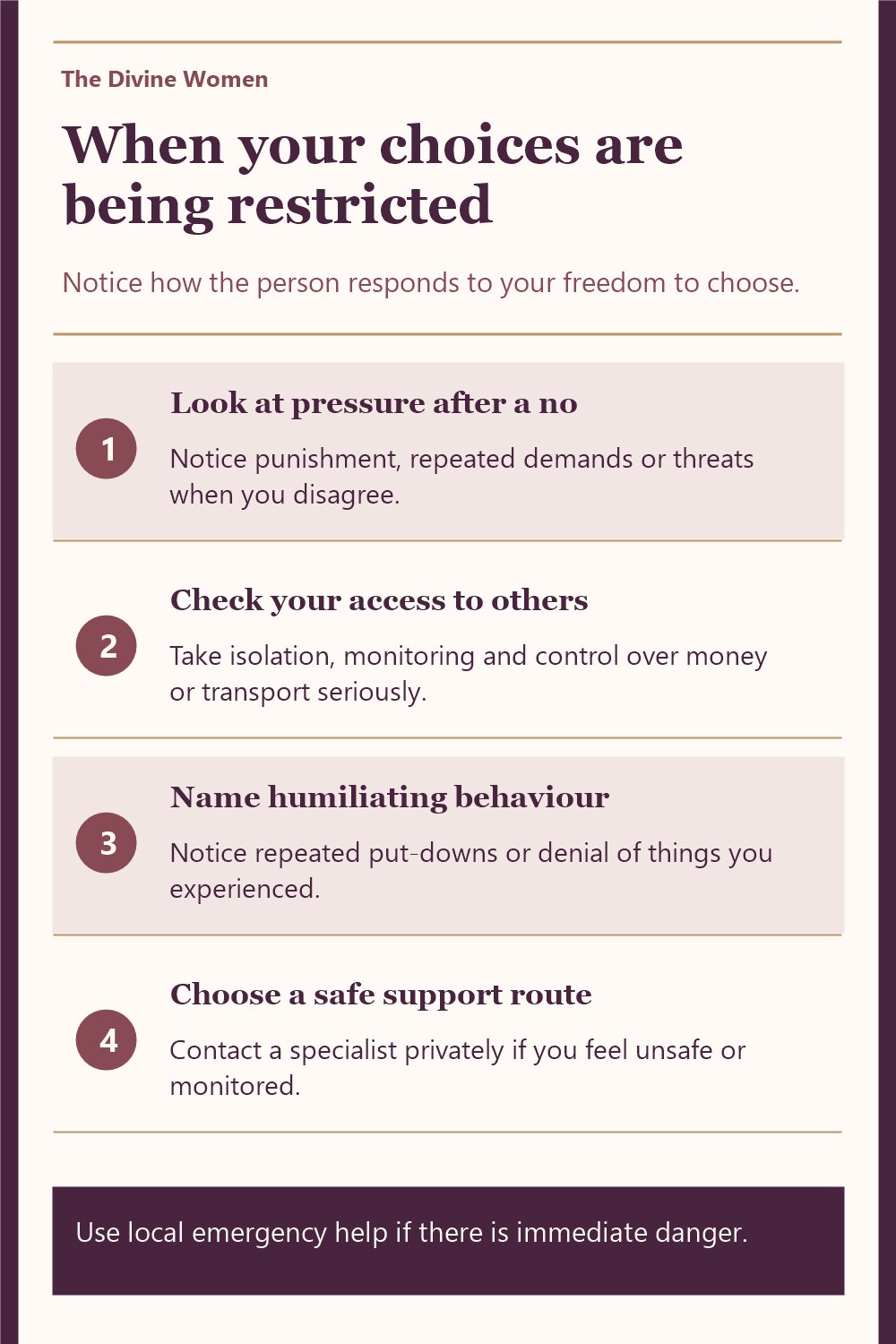
When your choices are being restricted Notice how the person responds to your freedom to choose.
- Look at pressure after a no Notice punishment, repeated demands or threats when you disagree.
- Check your access to others Take isolation, monitoring and control over money or transport seriously.
- Name humiliating behaviour Notice repeated put-downs or denial of things you experienced.
- Choose a safe support route Contact a specialist privately if you feel unsafe or monitored.
Use local emergency help if there is immediate danger.