

If patterns around romance or sex feel difficult to control, it can be hard to decide whether you need help. You might be worried about time, money, secrecy, relationship conflict or repeatedly acting against decisions you made for yourself.
Start with the effect on your life rather than a label. Having sexual desire, masturbating or wanting a relationship does not by itself establish a disorder. Distress, loss of control and harm deserve a careful conversation with a qualified professional.
On this page
Describe the pattern you are concerned about
Consider what is happening, how often it occurs and what it is affecting. Are you repeatedly missing responsibilities, spending more than you intend or finding it difficult to stop a behaviour despite wanting to? Are you distressed by the pattern or concerned that it is harming you or someone else?
These questions can help you explain a concern. They are not a self-diagnosis, and there is no universal number of dates, sexual thoughts or sexual experiences that settles the question.

Understand the limits of addiction labels
Mayo Clinic describes compulsive sexual behaviour in terms of difficult-to-control urges or behaviours that cause distress and problems in important areas of life. The concern is not simply enjoying sex or having a desire that differs from someone else’s.
People also use “love addiction” to describe distressing preoccupation with romance, reassurance or staying in a relationship. The phrase alone cannot establish why you feel this way or which kind of support would help. Wanting affection does not make you unworthy of love.
Seek a suitable assessment
A health care professional can help you consider the behaviour, your circumstances and any other concerns that need attention. Ask about their experience with compulsive sexual behaviour or the relationship pattern you want to discuss.
It can help to bring a brief account: what concerns you, what you have tried to change and what consequences you have noticed. You do not need to describe every private detail to a friend or partner before asking a professional for help.
Support may involve understanding triggers, discussing treatment options and developing a plan suited to you. Avoid promises that one course, reading or relationship will resolve the problem.
Make room for consent and accountability
Feeling a strong urge or having a mental health concern does not remove another person’s right to decline contact or sex. Nor does it make a partner responsible for preventing your behaviour by being more available.
If you have broken a relationship agreement, take responsibility for that choice without diagnosing yourself as an explanation that the other person must accept. They remain free to set boundaries or end the relationship.
If you are concerned that you may hurt yourself or another person, seek urgent professional help. For an immediate life-threatening emergency, contact local emergency services.
Take one practical next step
Choose a step that matches the concern: arrange an assessment, identify a recurring situation to discuss with a clinician or ask a trusted person for support in contacting care. If another person’s controlling or threatening behaviour is the issue, seek help for your own safety rather than assuming you must treat their “love addiction.”
You can approach a private concern with honesty and care. The goal is understanding what is happening and finding appropriate support, without shame or a label that explains more than it can.
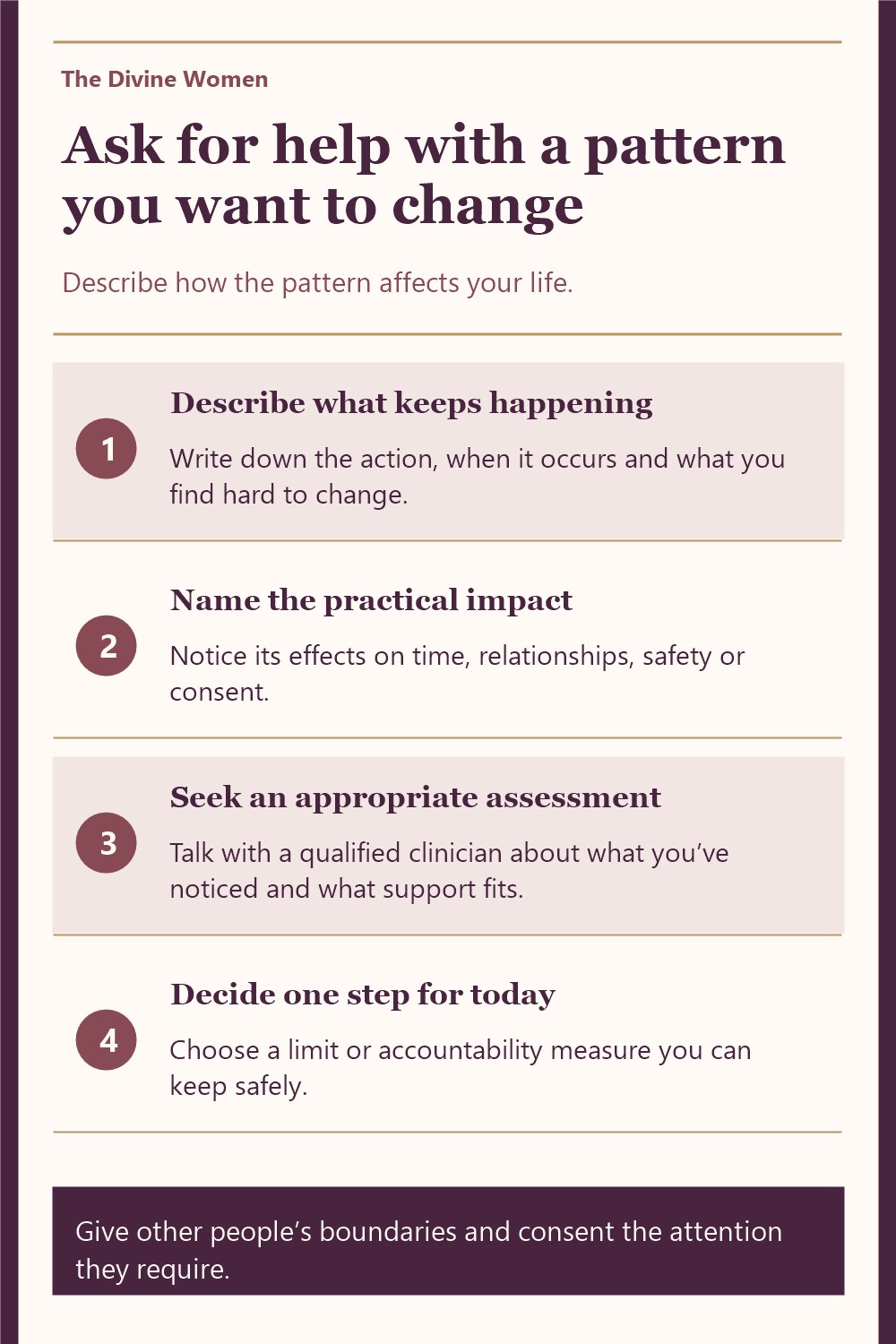
Read the infographic in text
Ask for help with a pattern you want to change Describe how the pattern affects your life.
- Describe what keeps happening Write down the action, when it occurs and what you find hard to change.
- Name the practical impact Notice its effects on time, relationships, safety or consent.
- Seek an appropriate assessment Talk with a qualified clinician about what you’ve noticed and what support fits.
- Decide one step for today Choose a limit or accountability measure you can keep safely.
Give other people’s boundaries and consent the attention they require.