

Feeling unwanted can make you question whether you deserve affection, respect or a relationship at all. A rejection, a painful history or a partner’s criticism can feel like evidence against you. None of those experiences establishes your value as a person.
Being worthy of love does not mean that a particular person must return your feelings. It means you do not have to earn basic dignity by becoming flawless, hiding your needs or accepting treatment that hurts you. You can want connection while taking your own side in ordinary, practical ways.
On this page
Separate your worth from an outcome
A person may not want a relationship with you, or may be unable to offer the commitment you want. That can be painful information about the connection. It is not a reliable measurement of your attractiveness, character or chances of being cared for elsewhere.
Try naming what actually happened: “They did not want to continue dating” is more precise than “Nobody will ever want me.” You do not have to feel reassured immediately. The aim is to keep a difficult event from becoming a verdict on your entire life.
Being single, needing support or taking time away from dating does not reduce your worth. Neither does having a disability, an illness, financial difficulties or a complicated past. You can work on parts of life you want to change without treating yourself as a person who must qualify for kindness.

Answer self-criticism without forcing praise
If “I am amazing” feels impossible to believe, choose something more grounded: “I am hurting, and I can still treat myself with care.” A useful response does not need to win an argument with every doubt. It can simply interrupt an unnecessary insult.
Notice the difference between accountability and condemnation. “I interrupted that conversation; I can apologise and listen next time” points toward an action. “I ruin everything” gives you no workable next step and ignores all the details that do not fit it.
Difficult thoughts do not cause you to deserve loneliness or mistreatment. You are not responsible for attracting another person’s harmful choices by lacking confidence. When self-criticism returns, you can repeat a kinder response without judging yourself for needing the reminder.
Make respect visible in daily life
Self-respect can be a decision about what happens next, rather than a feeling you must produce first. You might ask for notice before plans change, decline an unwanted touch or stop a conversation that has become insulting. Small boundaries can express a need even when you feel uncertain.
Look at how the other person responds. A disagreement can leave room for listening, clarification and repair. Threats, humiliation or punishment for saying no deserve serious attention. Affection does not require you to surrender privacy, friendships or control over your body.
You do not have to describe past harm as beautiful or be grateful for it. You may recognise strengths you have developed while also wishing the experience had never happened. Both responses can belong to your story.
Let support fit your needs
Consider who can listen without turning the conversation into a performance of positivity. A specific request can help: “Could you keep me company this evening?” or “I need you to listen before offering suggestions.” Practical help may matter as much as reassurance.
One person does not have to meet every need. You might turn to a friend for companionship, a community activity for regular contact or a qualified professional for help with ongoing distress. What is available will depend on your circumstances and resources.
Having lived through something painful does not oblige you to counsel other people. You can share your experience if you want to, while keeping limits on what you take on. Receiving care is not a debt you must repay immediately.
Choose a next step without proving yourself
Ask what would make today more manageable: eating something, taking a break from a painful exchange, arranging company or completing one necessary task. These actions do not establish your worth. They are ways to care for a person whose needs already matter.
If dating feels welcome, you can make room for it at your own pace. If it feels exhausting, a pause is also a choice. You do not need a romantic success story to demonstrate that you have recovered or become confident enough.
You may still have doubts tomorrow. Let the next step be small enough to repeat: a fairer sentence about yourself, a freely chosen boundary or contact with someone who treats you thoughtfully. Your right to care does not depend on feeling certain that you deserve it.
Read the infographic in text
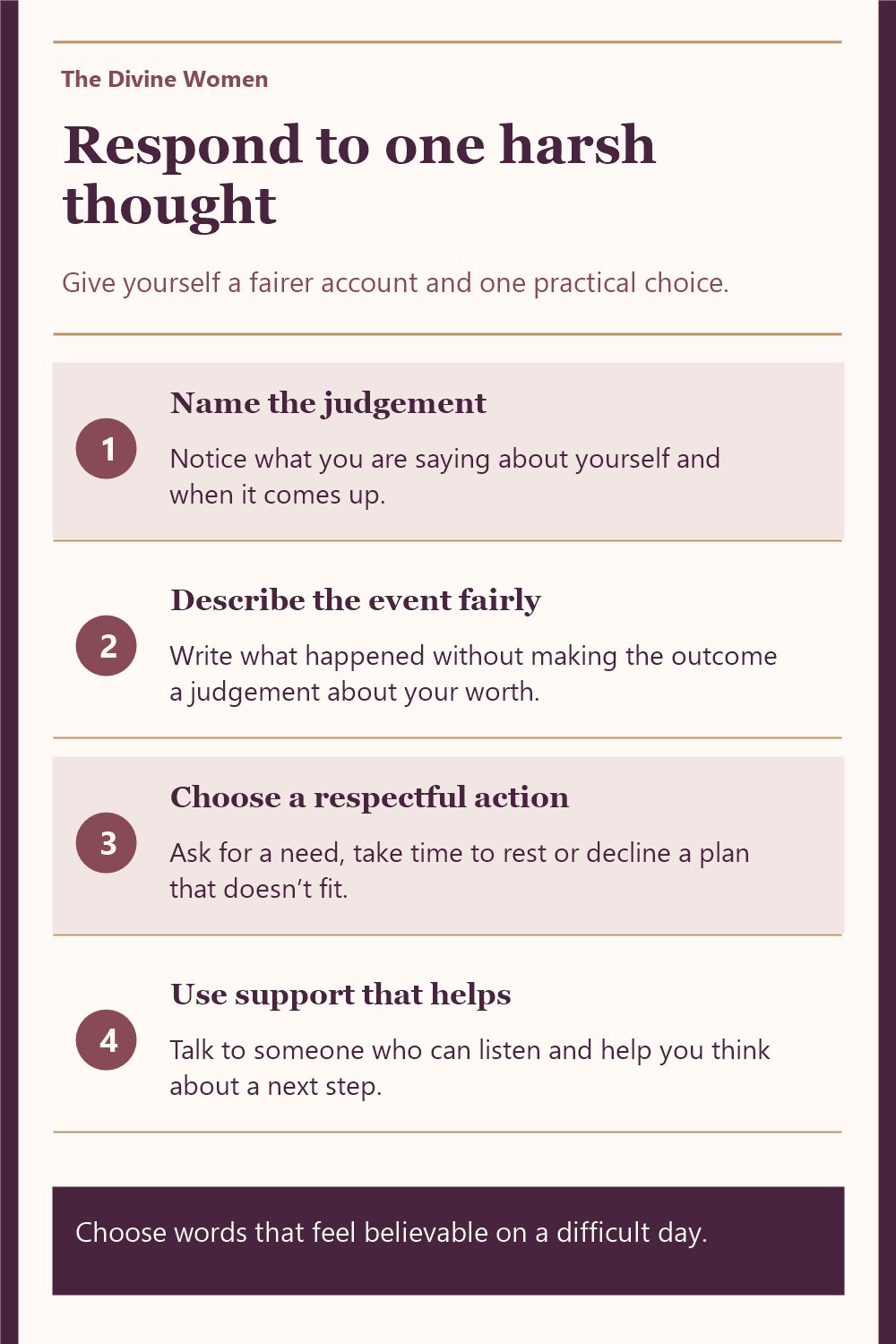
Respond to one harsh thought Give yourself a fairer account and one practical choice.
- Name the judgement Notice what you are saying about yourself and when it comes up.
- Describe the event fairly Write what happened without making the outcome a judgement about your worth.
- Choose a respectful action Ask for a need, take time to rest or decline a plan that doesn’t fit.
- Use support that helps Talk to someone who can listen and help you think about a next step.
Choose words that feel believable on a difficult day.