

Dating, exclusivity and being in a relationship can mean different things to different people. A connection does not become clear simply because you have had several good dates, met friends or started spending most weekends together.
The useful distinction is what you both understand and freely agree to. You can enjoy getting to know someone while asking about intentions, contact and commitments. There is no required sequence or deadline that every connection must follow.
In this article
Explain what dating means to you
Casual dating might mean occasional dates, getting to know several people or spending time together without planning a long-term partnership. Those meanings are not interchangeable. Ask what the other person means before assuming you have accepted the same arrangement.
You can say, “I am interested in getting to know you, and I am looking for a committed relationship if we are compatible.” That expresses a direction without asking for a lifetime promise on a first date.
Someone else may want companionship without a long-term commitment, or may be unsure. You can decide whether that fits you. Casual dating is not automatically a stepping stone to commitment, and committed dating is not the only respectful way to connect.
You do not have to disclose every private detail immediately. Be clear about information that affects the other person’s choice to participate, while keeping room for privacy and an appropriate pace.
Discuss exclusivity as a specific agreement
Exclusive dating usually involves an agreement about not pursuing other romantic or sexual connections, but the details still need discussion. Ask what each of you is agreeing to. Do not infer exclusivity from frequent messages, affection or deleting an app on your own.
For example: “I would like us to date only each other. Is that what you want too?” If the answer is yes, clarify anything you understand differently. If the answer is no, you can choose whether to continue.
Exclusivity does not give either person access to passwords, private messages or location tracking. Trust is not established by surrendering privacy. You can discuss relevant concerns without demanding continuous proof of loyalty.
Some people freely agree to non-exclusive relationships. Those arrangements also need clear expectations, consent and ongoing conversation. Avoid treating a label as permission to ignore what someone actually wants.
Clarify the relationship label and everyday expectations
Calling yourselves partners may express an important commitment, but it does not settle every practical question. You may still need to discuss contact, plans, private time, introductions and whether you want similar things in the future.
Try asking, “What would being in a relationship mean for us day to day?” One person may picture seeing each other several times a week; the other may need more time around work or family responsibilities. Neither can read the expectation that has not been expressed.
Discuss public sharing separately. Agree before posting a relationship announcement, tagging someone in personal photographs or sharing private information with friends. A relationship can be meaningful without every part being public.
Physical affection also remains a choice at every stage. A date, exclusive agreement or long-term label does not create an obligation to kiss, have sex or accept touch.
Revisit an agreement when something changes
Feelings, schedules and priorities can change. Raise the change directly rather than expecting the other person to discover it through hints. “I am finding this pace difficult” gives you a starting point for a conversation.
Where you both want an adjustment, agree on a practical version and check how it works. You might plan fewer midweek meetings or discuss a concern that was left vague. A conversation can clarify choices; it cannot guarantee that your preferences will become compatible.
The love is respect guide to boundaries offers further prompts about comfort, privacy and freely chosen changes. Keep room for either person to disagree or change their mind.
Respect a mismatch or an ending
You may discover that you want different relationships. You can end dating without proving the other person is bad or waiting for a particular number of dates. Wanting something different is information to act on, not an invitation to persuade someone into commitment.
When it feels safe, a clear message can help: “I have enjoyed getting to know you, but I do not want to continue dating.” You do not need a long debate or an in-person meeting. If there are threats, harassment or fear, prioritise safety and suitable support over a rule about the perfect breakup format.
If there are shared plans or belongings, arrange the practical details with the contact you can manage. Friendship afterwards is optional. Dating and relationship labels are useful when they help both people understand what they are choosing.
Read the infographic in text
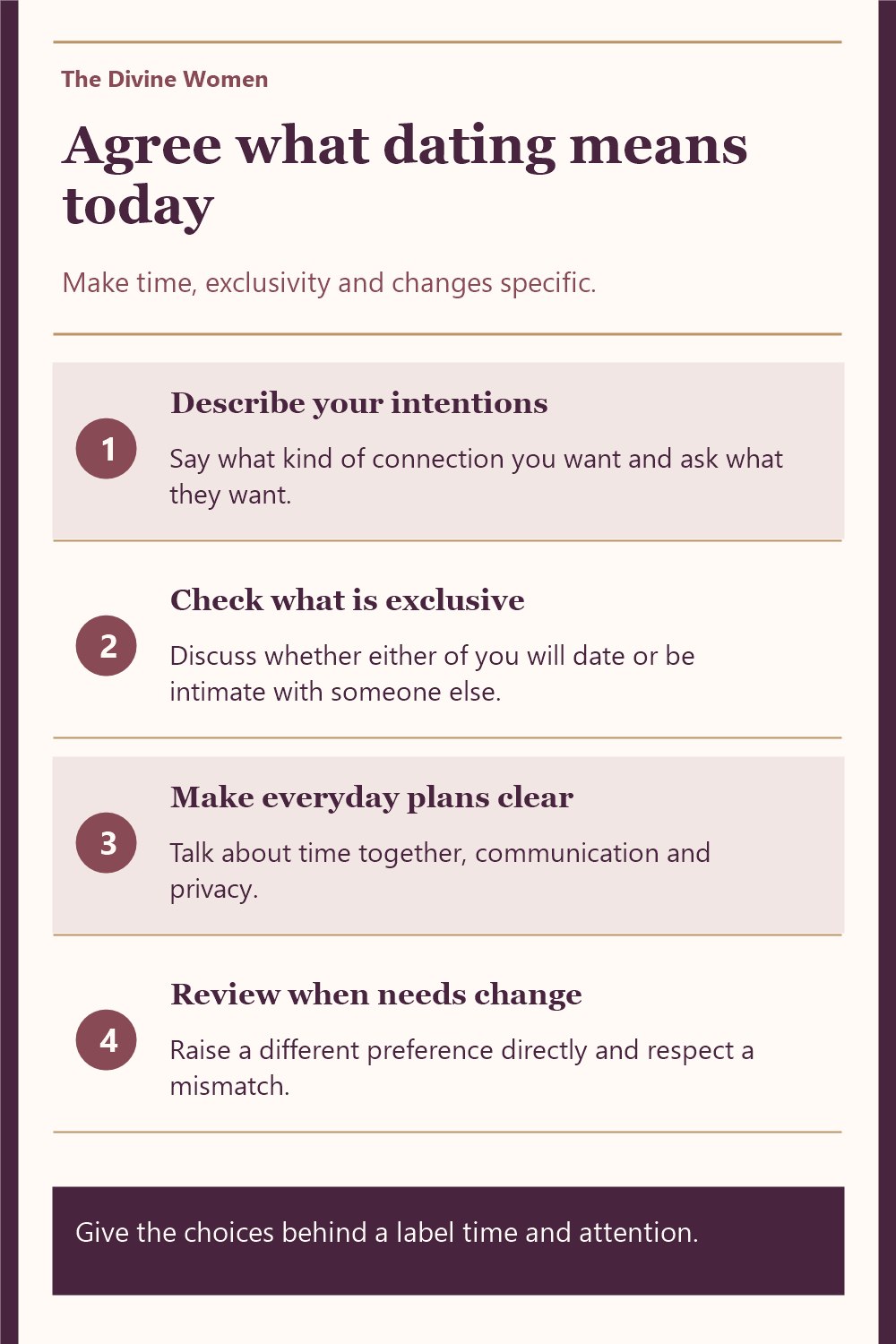
Agree what dating means today Make time, exclusivity and changes specific.
- Describe your intentions Say what kind of connection you want and ask what they want.
- Check what is exclusive Discuss whether either of you will date or be intimate with someone else.
- Make everyday plans clear Talk about time together, communication and privacy.
- Review when needs change Raise a different preference directly and respect a mismatch.
Give the choices behind a label time and attention.