

If a delayed reply makes you want to send another message, or a serious conversation makes you want to pull away, start with what happened in that moment. Attachment language can give you words for patterns around closeness. You can use it to notice what you need and practice a response that fits the situation.
On this page
Name what happens in a specific moment
Write down the event, the explanation you gave it and the action you wanted to take. For example, “They canceled dinner. I thought they were losing interest. I wanted to cancel our next plan before they could.” The detail gives you something you can check.

Ask for something that would help
If uncertainty is difficult, ask whether you can confirm plans by a certain time. If closeness feels intense, try “I want to finish this conversation. Can I take half an hour and call you after dinner?” Keep the request small enough for both people to try.
Notice how the other person responds
Repeated broken plans, dismissive replies and pressure to move faster deserve attention in their own right. Look for an answer that respects both people’s needs. If you often pursue people who have said they’re unavailable, take their answer seriously and decide where you want to put your attention.
Practice one change you can keep
You might wait until the agreed time to follow up, say when you’ll return to a hard conversation or keep a plan with a friend while you wait. If old reactions regularly overwhelm you or disrupt your relationships, a counselor can help you explore them in a setting where you have time to reflect.
Read the infographic in text
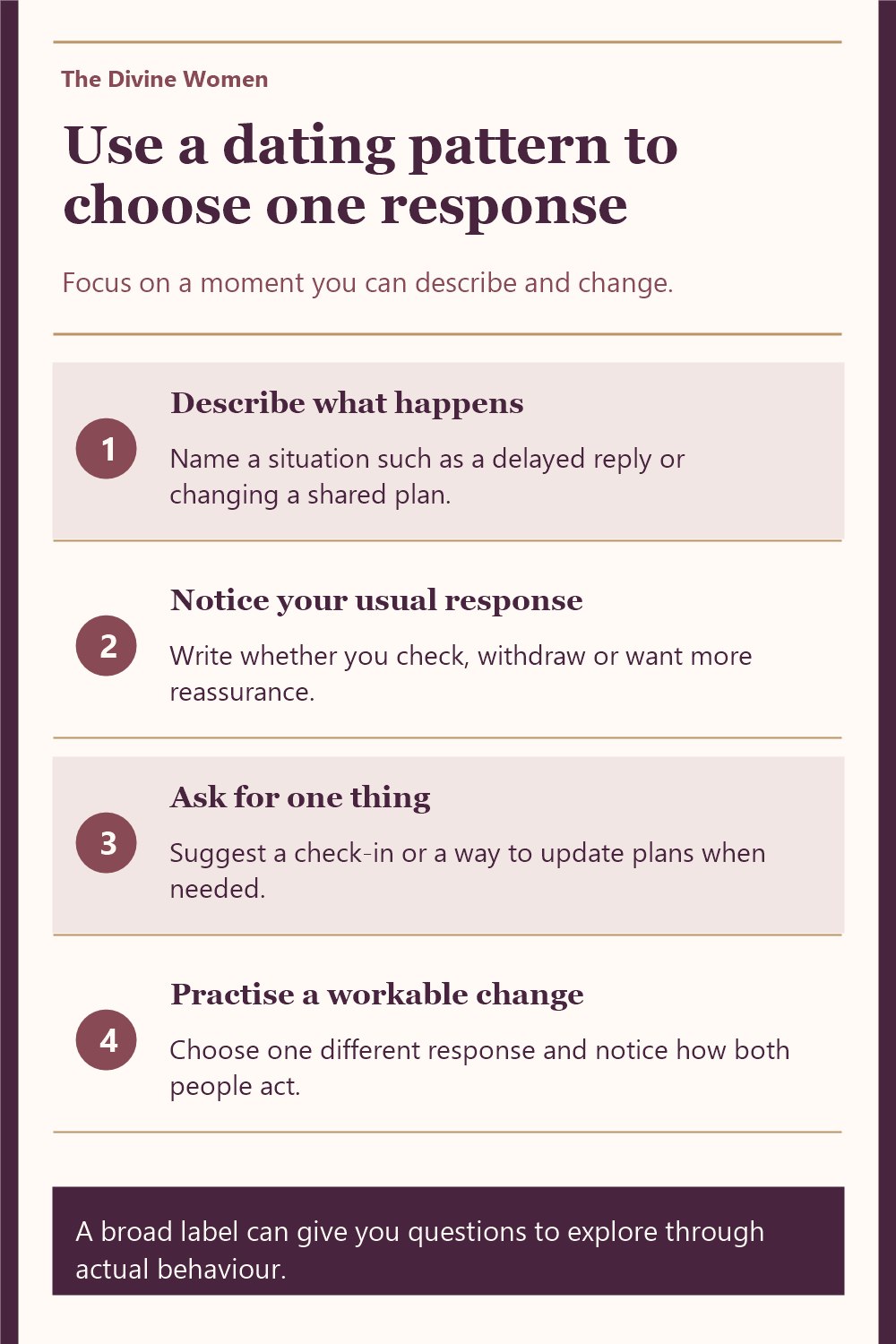
Use a dating pattern to choose one response Focus on a moment you can describe and change.
- Describe what happens Name a situation such as a delayed reply or changing a shared plan.
- Notice your usual response Write whether you check, withdraw or want more reassurance.
- Ask for one thing Suggest a check-in or a way to update plans when needed.
- Practise a workable change Choose one different response and notice how both people act.
A broad label can give you questions to explore through actual behaviour.