

Trusting someone is rarely a decision you make once and never revisit. You learn about a person through ordinary interactions: what happens when plans change, when you disagree and when you ask them to respect a limit. Warmth and chemistry can matter without answering every question about reliability.
You do not have to reveal everything, make a large commitment or ignore discomfort to prove that you trust someone. Let the level of trust fit what you know and the choice in front of you.
On this page
Give trust time and context
Knowing someone for a long time can provide useful experience, but time alone does not establish trustworthiness. Consider how they behave in the situations that matter to you, including situations where being considerate is inconvenient.
Trust can be specific. You may trust a friend with a confidence while choosing not to lend money, or enjoy dating someone while you are still learning how they handle commitments. A slower decision is not an accusation.
Ask what you are comfortable choosing now. You can say, “I enjoy getting to know you, and I want more time before we make that plan.” Readiness can differ between people, and neither person has to match the other’s timetable.

Notice reliability and honesty
Look for consistency between an agreement and what happens afterward. When a plan changes, do they tell you where reasonably possible? If they make a mistake, can they acknowledge it without repeatedly changing the story or blaming you for asking?
Mutual interest involves effort from both people, but it does not mean identical texting habits or constant availability. Discuss what contact you each want and can offer. A delay or quiet day is not enough to establish a person’s motives.
Promises about never leaving can feel reassuring, but no phrase guarantees future behaviour. Ask about the commitment being offered now and notice whether actions support it. You can appreciate reassurance without making a major decision on that alone.
Watch the response to limits
Notice whether the person respects an ordinary no: declining a visit, keeping a password private or asking to leave a subject alone. Someone can feel disappointed and still respond without ridicule, threats or pressure.
The loveisrespect guide to boundaries explains that limits can be physical, emotional and digital. Trust does not require giving up those limits. You are allowed to change your mind about what you are comfortable sharing or doing.
Pay attention to how private information is handled. Does the person ask before passing on something personal? Do they use a vulnerable disclosure to embarrass you during conflict? You can decide to share less while considering what the pattern means for you.
Keep your own choices
Support is valuable, but nobody can promise to be available at every moment. Talk about what help is realistic and keep other sources of support. Reliability can include honestly saying, “I cannot do that today,” rather than agreeing and repeatedly disappearing.
Care should leave room for your happiness without making someone responsible for every feeling. You can enjoy their company and still make your own plans, maintain friendships and decide what you need from the relationship.
Avoid secret tests, account searches or setting traps to find out whether someone is trustworthy. Ask about a specific concern where it is safe to do so. If an important agreement remains unclear, decide what you are prepared to commit to while you seek clarity.
Respond when trust changes
If trust is broken, identify the action and the agreement involved. Repair requires responsibility and follow-through from the person who caused harm. You do not have to speed up your decision because they have apologized or say the relationship should return to normal.
If you feel afraid to question them, say no or seek outside support, take that fear seriously. Confidential individual support or a local domestic-abuse service can help you consider safer options; you do not need to arrange a confrontation first.
You can reduce contact, change an agreement or leave a relationship without proving that someone is entirely untrustworthy. Let your decision reflect the behaviour you have observed, your needs and the choices you can make safely.
Read the infographic in text
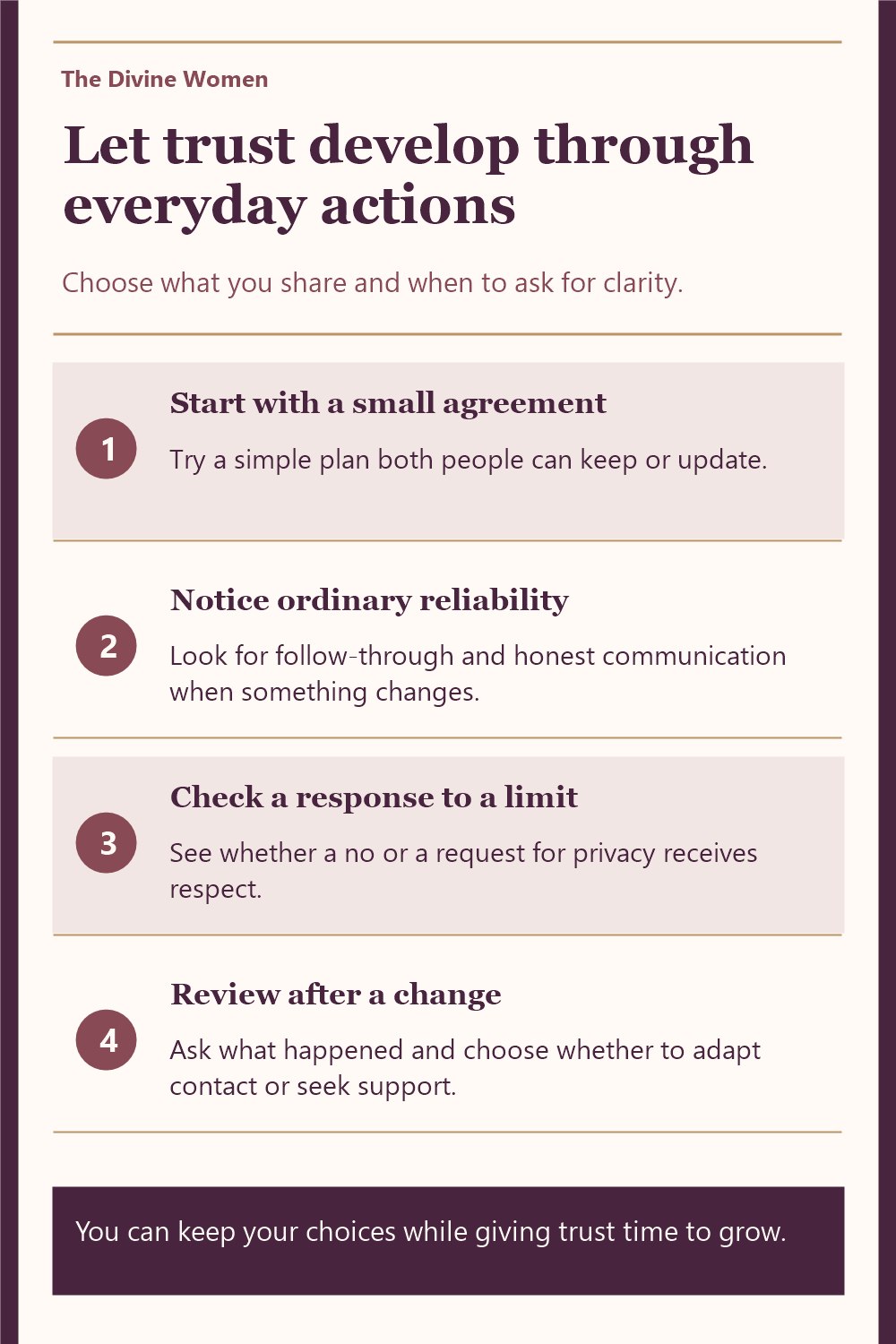
Let trust develop through everyday actions Choose what you share and when to ask for clarity.
- Start with a small agreement Try a simple plan both people can keep or update.
- Notice ordinary reliability Look for follow-through and honest communication when something changes.
- Check a response to a limit See whether a no or a request for privacy receives respect.
- Review after a change Ask what happened and choose whether to adapt contact or seek support.
You can keep your choices while giving trust time to grow.