

Before you agree to be exclusive, you may be dating, seeing a friend casually or getting to know someone through messages. Ask what the arrangement means in everyday terms. You each get a say in what you agree to and whether you want to continue.
On this page
Ask what the label means in practice
“Casual” can mean occasional dates to one person and an ongoing sexual relationship to another. If you’re friends who sometimes have sex, ask what you each want from the friendship and whether that would change if either of you began dating someone else.

Talk before assuming exclusivity
Try “I’ve enjoyed seeing you. Are you still dating other people, and what are you looking for right now?” If you’re considering sex, discuss consent, safer-sex preferences and which information you’d want to share if the arrangement changes.
Decide whether you want to move beyond messages
If you would like to meet, suggest a public place and a time. If the reply stays vague, ask once whether meeting is something they want. You can stop investing time in a chat that keeps you waiting for a step the other person doesn’t want.
Revisit the arrangement when feelings change
You can say “This has started to matter to me, and I’d like to date exclusively. Is that what you want?” Give them room to think and decide what you’re willing to keep doing while you wait. If you want different things, a clear ending can give both of you space.
Read the infographic in text
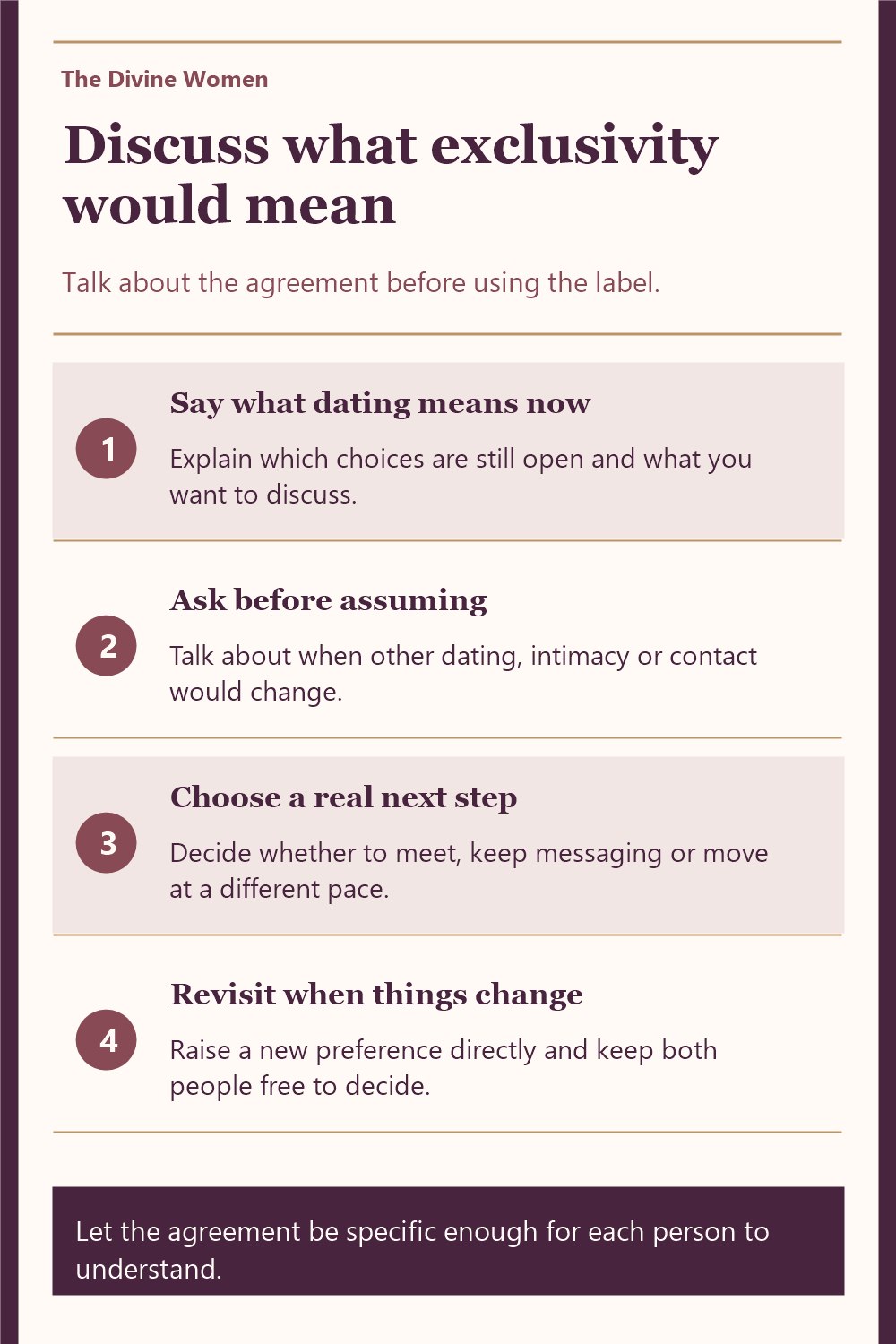
Discuss what exclusivity would mean Talk about the agreement before using the label.
- Say what dating means now Explain which choices are still open and what you want to discuss.
- Ask before assuming Talk about when other dating, intimacy or contact would change.
- Choose a real next step Decide whether to meet, keep messaging or move at a different pace.
- Revisit when things change Raise a new preference directly and keep both people free to decide.
Let the agreement be specific enough for each person to understand.