

If you use chakra language in your spiritual life, “clearing” may describe a wish to feel more settled, attentive or connected with what matters to you. You can explore that meaning without treating every difficult emotion or physical symptom as evidence of blocked energy.
There is no deadline to clear your chakras and no need to force a particular sensation. A useful practice should leave room for your comfort, choices and ordinary needs. Here is how to consider four approaches without expecting them to diagnose a problem or guarantee healing.
On this page
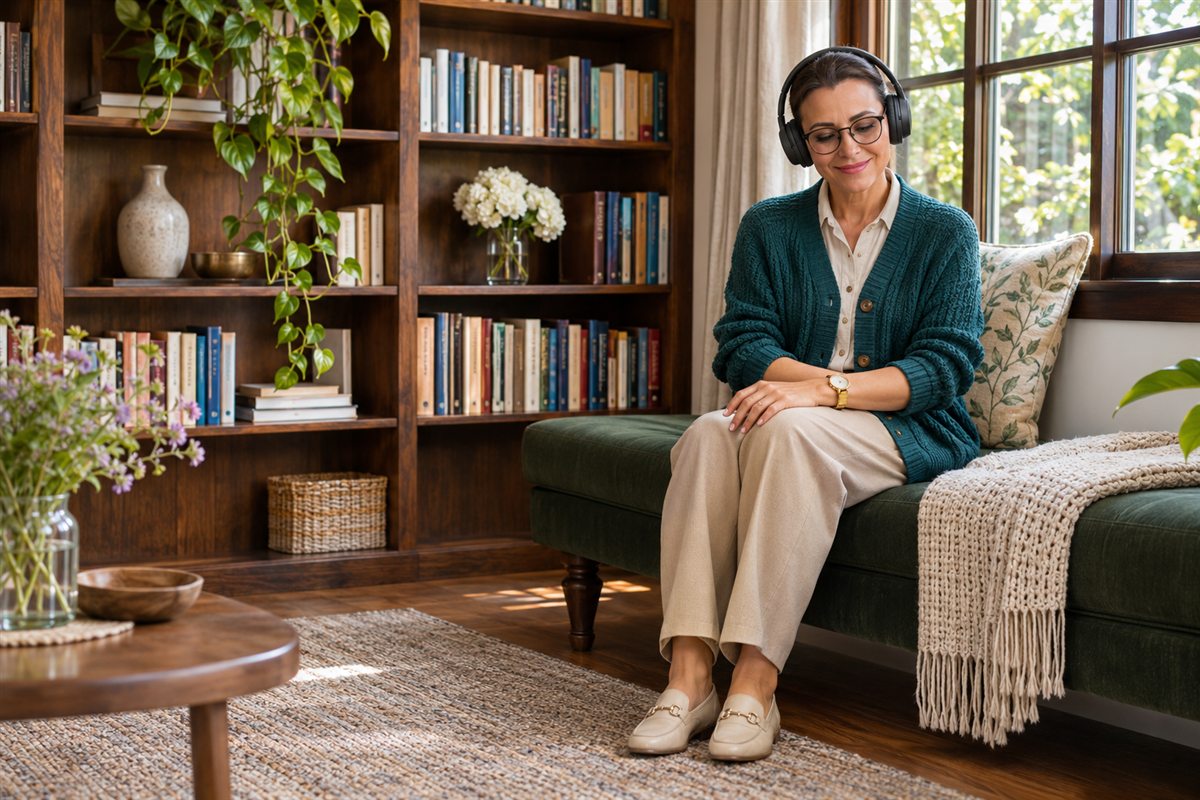
Mantras: choose a comfortable focus
A repeated word, sound or phrase can give you a focus during reflection. If mantras belong to your faith or a tradition you follow, learn about their meaning and use from a knowledgeable teacher in that tradition. You do not need to assume that one set of sounds or pronunciations is universal.
For an informal practice, choose a short phrase that feels appropriate, or simply sit quietly. Use an ordinary speaking volume or repeat it silently. Prayer beads can help you keep your place if you already use them, but a prescribed number of repetitions is not necessary for a personal pause.
- Sit in a position you can maintain comfortably, including a supported chair.
- Choose a word or phrase, or rest your attention on a familiar sound around you.
- Allow your breathing to stay comfortable rather than making it forceful.
- Pause whenever you need to, then return to the next ordinary part of your day.
Wandering thoughts are not proof that the practice failed. You can return your attention gently or stop. A sensation of warmth, tingling or calm does not establish that a chakra has been cleared.
Tapping: keep choice and comfort central
You may encounter tapping exercises alongside affirmations or chakra practices. Be careful with explanations that describe emotions as trapped material that must be released from your body. Having sadness, anger or anxiety does not mean you have failed to maintain your energy.
You do not have to tap particular points, count to nine or revisit an upsetting memory to take a reflective break. Avoid pressure to follow a routine that feels painful, intrusive or overwhelming. Choosing a quiet activity, taking a pause or talking to someone you trust are also options.
If you are seeking help with trauma or persistent emotional distress, discuss your needs with a qualified mental-health professional. A spiritual exercise should not become a reason to delay support or a test of whether you are willing to heal.
Reiki: understand the claims and limits
Reiki involves a practitioner’s hands being placed lightly on or above a person, within a belief in healing energy. Some people choose it as a personal or spiritual experience. That is different from knowing that it treats a health condition or clears an identifiable blockage.
The National Center for Complementary and Integrative Health’s Reiki overview says health benefits have not been clearly demonstrated and that scientific evidence does not support the proposed energy field. This does not tell you what an individual session will feel like, but it limits what can responsibly be promised.
If you are considering a session, ask what will happen, whether touch is involved, what it costs and how you can pause or stop. A practitioner should respect your refusal and your existing health care. You do not owe anyone additional sessions because they say your energy is blocked, and a spiritual title does not establish medical qualifications.
Yoga: adapt the practice to your body
Yoga includes different approaches to movement, breathing and meditation. If you use chakra ideas while practising, they can be part of your personal interpretation. A posture or stretch does not need to produce a particular energy sensation to be worthwhile to you.
NCCIH’s guidance on yoga effectiveness and safety describes possible wellness benefits alongside limitations and injury risks. It recommends appropriate instruction and adaptations for individual needs. Beginners should avoid extreme poses and forceful breathing.
Tell an instructor about relevant limitations, and ask for options such as a chair, support or a different movement. If you are pregnant, have an injury or have a health condition, discuss suitable adaptations with your health care provider and instructor. There is no need to push through pain to “open” an energy centre.
Choose a practice and notice its effect
Start with what you want from the time: a quiet pause, a familiar ritual or gentle movement. Choose one manageable activity rather than combining several methods because you feel you must fix yourself. You can decide how long to try it and stop earlier if you wish.
Afterward, ask a practical question: Do I feel comfortable enough to return to my day? You might feel calmer, unchanged or ready for a different kind of support. None of those responses is a verdict on your spiritual worth.
Keep ordinary care in view: rest, meals, relationships and appropriate help for health concerns. A spiritual practice can have a place in your life without being responsible for every difficulty you experience.
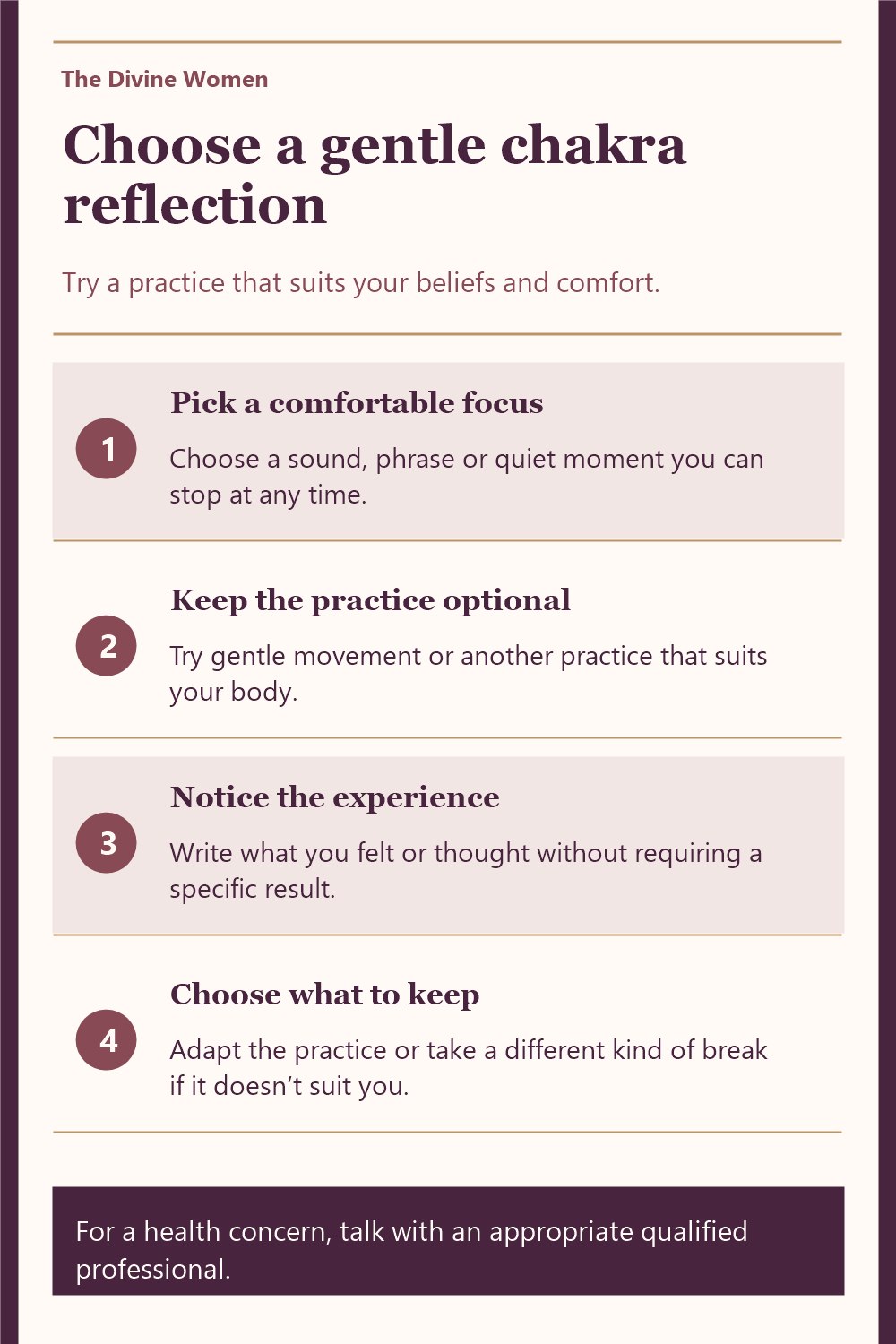
Read the infographic in text
Choose a gentle chakra reflection Try a practice that suits your beliefs and comfort.
- Pick a comfortable focus Choose a sound, phrase or quiet moment you can stop at any time.
- Keep the practice optional Try gentle movement or another practice that suits your body.
- Notice the experience Write what you felt or thought without requiring a specific result.
- Choose what to keep Adapt the practice or take a different kind of break if it doesn’t suit you.
For a health concern, talk with an appropriate qualified professional.