

When a man you care about says little about his feelings, you may feel shut out or unsure how to respond. You might want to offer support, understand a disagreement or know where the relationship stands. Start with that particular person and situation, rather than a rule about how all men think.
Some people need time to find words. Some prefer privacy or show care through practical actions. Others avoid a conversation that affects their partner. Those possibilities are different, and none can be confirmed simply because someone is a man. You can be considerate while still needing communication and accountability.
In this article
Ask about the person, rather than a stereotype
Quietness does not reveal an inner explanation. A person might be tired, uncertain, uncomfortable with the topic or unwilling to discuss it. You can ask, “Is this hard to put into words, or would you prefer to talk later?” Leave room for an answer you did not expect.
Do not assume that men use a logical side of the brain while women use an emotional side, or that gender tells you how someone processes a breakup. Such a shortcut does not help you understand the person in front of you. Look instead at their stated preferences, the situation and how they treat you.
If he describes being discouraged from showing sadness or vulnerability, listen to his account without turning it into a story about every man. You do not have to uncover his childhood or diagnose a hidden problem before deciding what would help this conversation.

Offer a manageable invitation
Begin with something specific: “You seemed quiet after that call. Would you like company, help with something or some space?” An invitation gives someone options. Repeatedly demanding “Tell me everything” can leave both of you struggling with a task that is too broad.
Ask about the format as well as the timing. He may prefer a short walk, a written message or a conversation after finishing another task. Neither constant eye contact nor immediate disclosure is a requirement for being heard. Choose a setting that works for both people.
If an important relationship question needs an answer, agree when to return to it. “We can pause now; can we talk tomorrow about the plans we need to make?” is clearer than leaving a difficult subject indefinitely unanswered. Time to think should still leave your practical needs in view.
Listen without taking over
When he does share, check what he means before offering an explanation. “Are you saying you feel disappointed about the change?” gives him a chance to correct you. You do not have to find the perfect label or agree with every interpretation to listen with care.
Ask whether he wants ideas, practical help or someone to hear him out. Keep private disclosures private unless there is a serious safety concern that requires help. Avoid bringing a vulnerable admission into an unrelated argument as proof that you understand him better than he understands himself.
Listening is not an obligation to absorb everything alone. You can say, “I care, and I have time for a short conversation now. I’ll need to rest afterwards.” A supportive relationship can include limits, other friendships and professional help where needed.
Keep your own needs and limits visible
A person can feel overwhelmed and still be responsible for their behaviour. Anger does not excuse insults, threats, intimidation or damaging belongings. You do not need to accept frightening behaviour as a natural male substitute for sadness or as a sign of hidden love.
Distinguish private feelings from information that affects your participation. He need not describe every thought, but you may need an answer about exclusivity, a cancelled commitment or a shared responsibility. “I respect that this is personal; I still need to know whether our agreement has changed” keeps the question focused.
If you feel unsafe, prioritise confidential support and safer choices over encouraging emotional openness. You cannot make a relationship safe by becoming a better listener, and joint conversations may be inappropriate when you fear the other person’s response.
Consider support and what happens next
If he wants help finding words or reaching out, the NHS guide to talking about mental health offers practical starting points. If distress is affecting daily life, encourage suitable professional support. A partner can care without being someone’s only source of help.
Notice what the two of you can actually work with. Does a small invitation lead to a clearer conversation? Are pauses followed by a return to the subject? Can both people express needs without being mocked or punished? These questions tell you more about the relationship than a gender stereotype.
You may choose to keep practising, change how you communicate or reconsider what the relationship offers you. Understanding someone’s difficulty does not require setting aside your own need for connection, reliability and respect.
Offer two manageable ways to check in
If a partner comes home quiet after a difficult day, ask whether they would like ten minutes to talk or would rather eat first and check in later. Give them room to choose and say whether there’s anything you need to discuss that evening.
If difficult issues repeatedly go unaddressed, focus on what remains unresolved and ask for an agreed time to return to it. You can look for support or make your own decision if they consistently decline.
Read the infographic in text
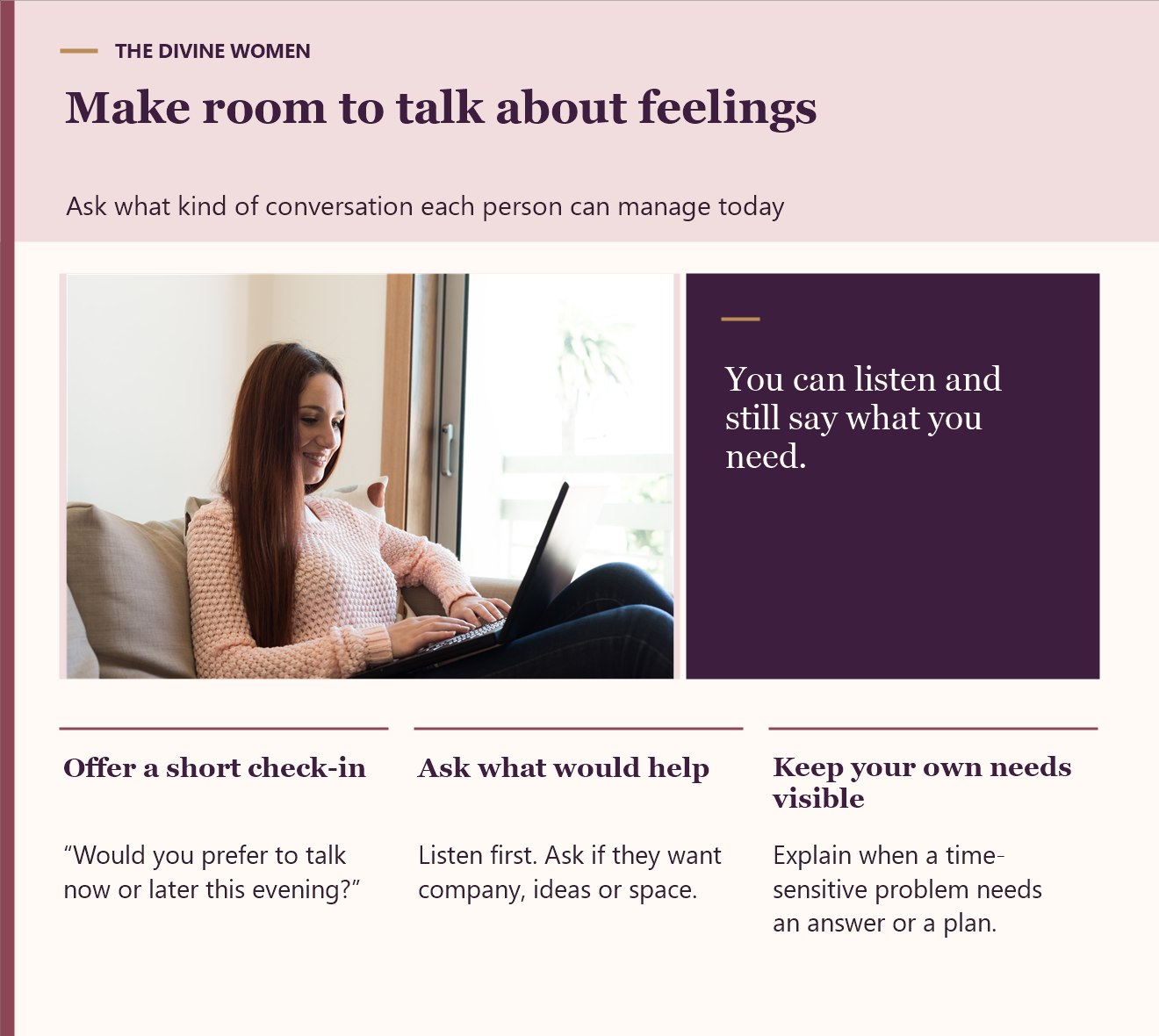
Make room to talk about feelings
Ask what kind of conversation each person can manage today
- Offer a short check-in “Would you prefer to talk now or later this evening?”
- Ask what would help Listen first. Ask if they want company, ideas or space.
- Keep your own needs visible Explain when a time-sensitive problem needs an answer or a plan.
You can listen and still say what you need.